
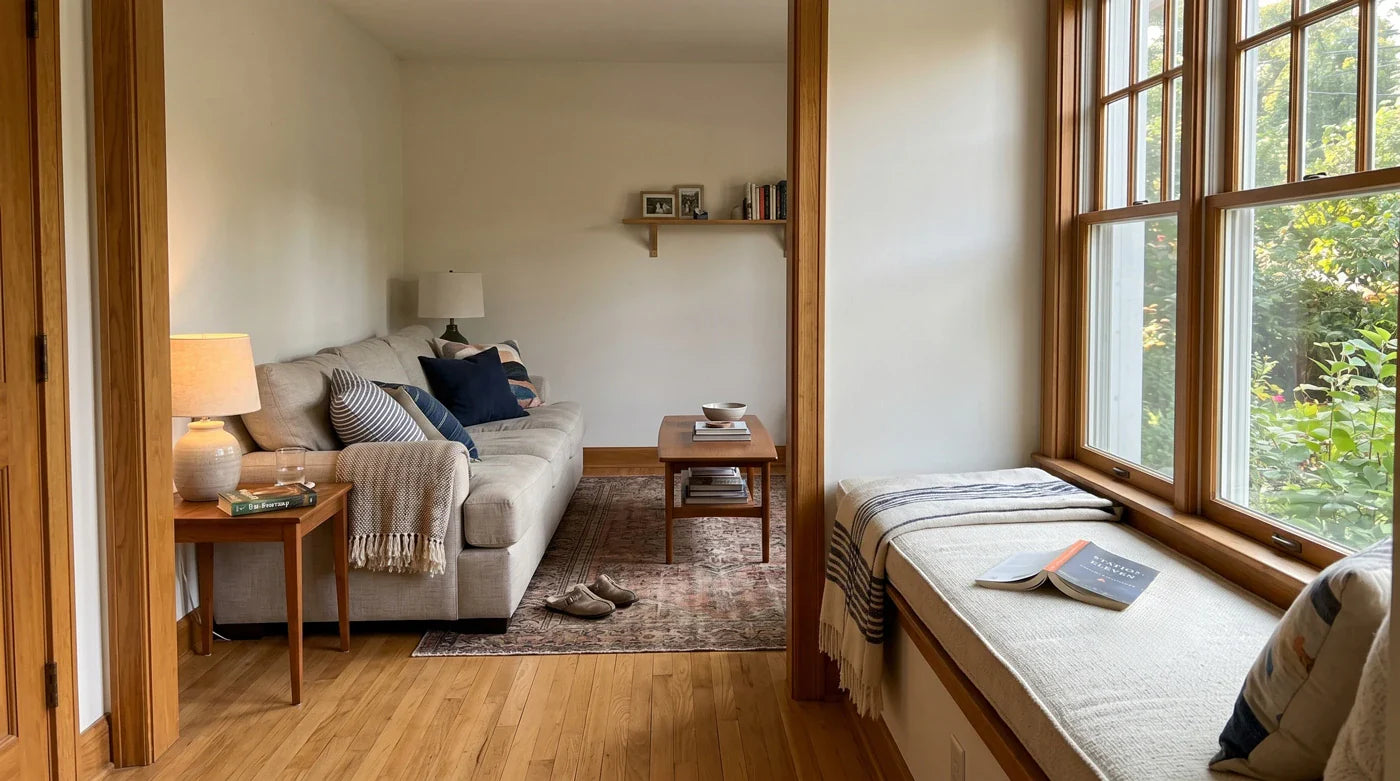
Are Custom Bench Cushions More Comfortable Than Sofa Cushions?
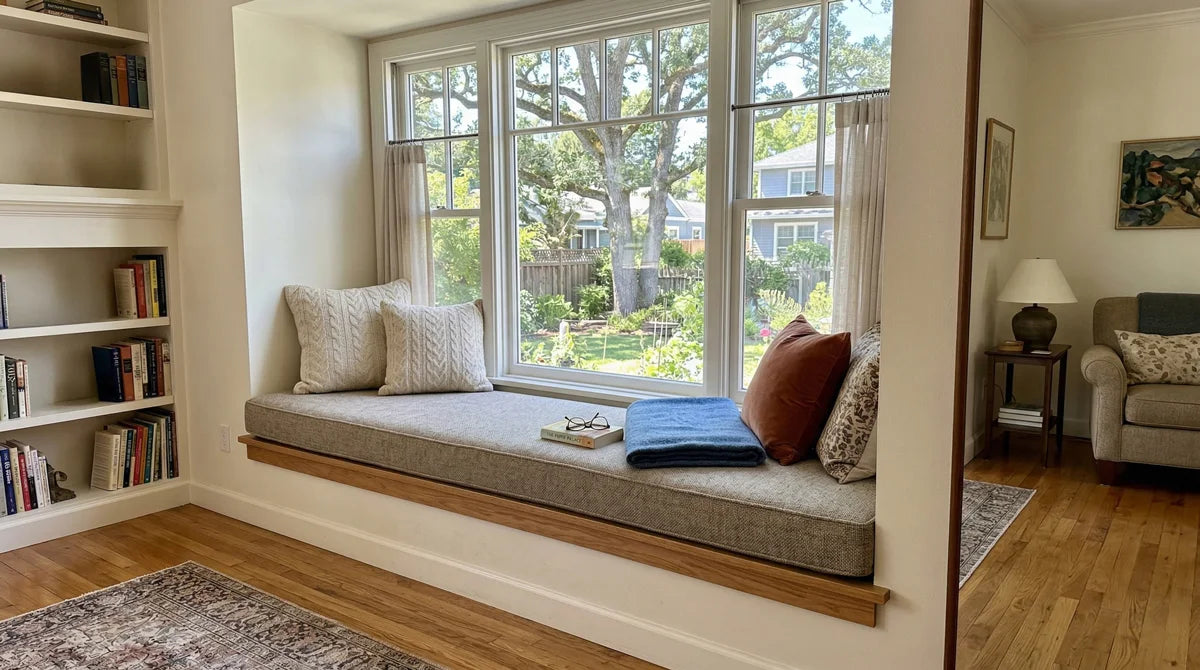
This question tends to come up when someone is trying to solve a specific seating problem — a window seat that nobody uses, a built-in bench that's been bare since the house was renovated, a loveseat with cushions that finally gave out — and they're trying to figure out whether a bench cushion is actually the right product or just a workaround. It's a fair question. The answer involves understanding what actually makes a cushion comfortable, which is a bit more nuanced than most product comparisons let on.
What "Comfortable" Actually Means for a Seat Cushion
Comfort in seating isn't a single property. It's a combination of at least three independent variables, and they interact differently depending on how long you're sitting, on what kind of surface, and at what seat height. Getting one right and neglecting the others produces a cushion that feels fine for twenty minutes and frustrating for an hour.
Foam density and resilience
Density — measured in pounds per cubic foot — determines how long foam holds its shape under repeated use. A 1.5 lb/ft³ foam feels fine when new and compresses noticeably within a year or two. A 2.0 lb/ft³ foam maintains its loft and support significantly longer. This is one of the most consistent predictors of long-term comfort, and it's almost never disclosed on standard retail cushions.
Resilience is related but distinct: it's how quickly foam recovers after compression. High-resilience foam bounces back within a second of pressure being released. Low-resilience foam (memory foam, for instance) takes several seconds. For seat cushions used by multiple people throughout a day, high resilience is almost always preferable — the seat feels the same whether you're the first person to sit down or the fourth.
Thickness relative to seat height
This one is underappreciated. A cushion that's too thin for the seat height puts the sitter at an awkward angle — knees too high, hips too low — which creates lower back tension within twenty or thirty minutes. A cushion that's too thick raises the sitter above the natural resting height, which creates a different set of problems. The right thickness is a function of the seat platform height, not an abstract preference for softness.
Most sofa cushions land in a fairly narrow thickness range because they're designed to bring a standard sofa frame to a standard seated height. Bench cushions — especially custom ones — can be specified to whatever thickness the seat actually requires, which matters considerably for built-in benches and window seats that weren't designed with a cushion in mind.
Fit — the factor most people underestimate
A cushion that doesn't cover the full seat surface forces the sitter to either stay in the center (limiting position changes) or risk sitting on the bare edge of the bench (which is immediately uncomfortable). A cushion that's too wide bunches at the sides, shifts when weight moves, and never lies flat. These aren't minor aesthetic problems — they directly affect how long someone will stay seated and how comfortable that sitting is.
Standard-size cushions are designed around manufacturing convenience, not around the actual range of seat dimensions that exist in homes. The result is that a significant portion of seating situations get a cushion that's close to the right size rather than exactly right. The gap is small enough that it's easy to accept, but it accumulates into real discomfort over time.

Where Sofa Cushions Have the Advantage
Worth being clear about this, because the comparison only means something if it's honest. Sofa cushions aren't an inferior product — they're the right product for the surface they're designed for.
Standard sofa cushions are engineered to work with upholstered sofa frames. The seat platform is recessed, the cushion slots in, and the sofa's structure provides lateral support that keeps the cushion in place without ties, non-slip backing, or a perfectly matched perimeter. The softness profile — slightly more give, slightly more enveloping — is calibrated for a seated experience where the sofa arms and back are also in contact with the body. It's a whole-body support system, not just a seat pad.
For that specific use case, a sofa cushion made to the right spec is exactly what you want. The problem isn't that sofa cushions are bad. It's that people often reach for sofa cushion logic when the seat they're trying to cushion isn't actually a sofa.
Where Custom Bench Cushions Win
- Seat is a standard upholstered sofa frame
- Cushion slots into a recessed platform
- Sofa arms and back provide additional body support
- Softness and enveloping feel is the priority
- Sitting posture is reclined rather than upright
- Seat surface is hard — wood, tile, built-in drywall
- Dimensions don't match any standard size
- Upright sitting posture for extended periods
- Seat is a window seat, nook, or built-in bench
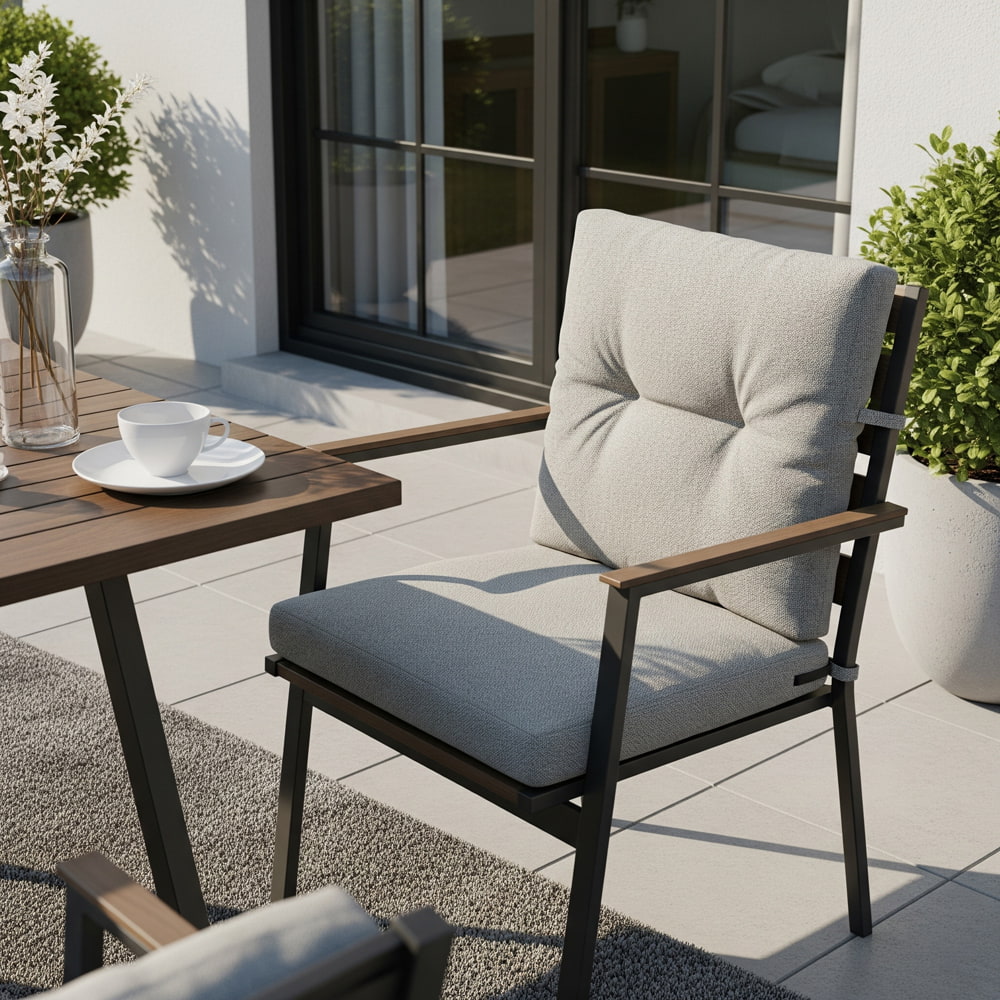
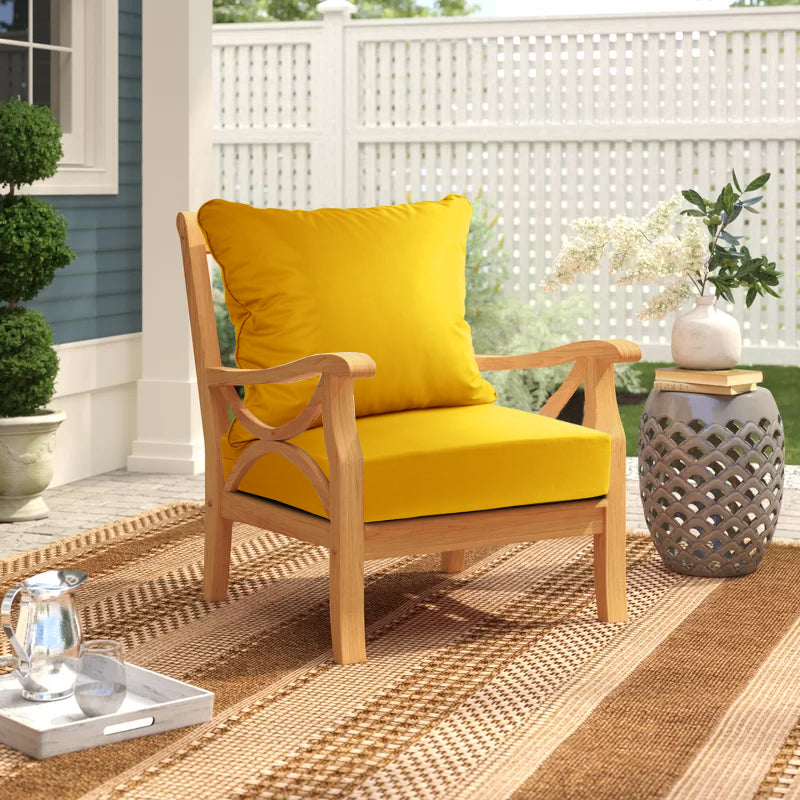
- UV resistance or outdoor durability is needed
The custom dimension advantage is the most significant one for most people reading this. A bench cushion made to the exact width and depth of the seat — including irregular shapes like trapezoids for bay windows or L-shapes for corner benches — covers the full sitting surface, stays in place, and makes it possible to sit anywhere on the seat rather than only in the center. According to research covered by UCLA's Human Factors and Ergonomics program, full surface contact and appropriate cushion depth are two of the primary contributors to seated comfort over extended periods — both of which are directly affected by how well a cushion fits its surface.
Hard-surface seating demands more from the cushion
On a sofa, the frame itself absorbs some of the structural load and provides edge support. On a bare wood bench or built-in seat, the cushion is doing all the work. This means firmness and foam density matter more, not less — and it means a cushion that's slightly undersized creates a noticeably harder edge experience at the margins than the same undersized cushion would on a sofa.
Long-duration sitting favors firmness over softness
There's a persistent intuition that softer means more comfortable. For short-term seating it's partially true. For sitting longer than thirty or forty minutes, firmness — meaning a cushion that maintains its loft and doesn't allow the sitter to "bottom out" — is consistently more comfortable. Bench cushions, particularly custom ones specified with appropriate foam density, tend to be firmer than sofa cushions by design. That's not a limitation. For window seats and dining benches used during long meals or weekend mornings, it's an advantage.
The Fit Variable Changes Everything
Consider two cushions: a premium sofa cushion in high-resilience foam, but cut two inches short of the actual seat width. And a custom bench cushion in the same foam spec, made to the exact seat dimensions. The second cushion is more comfortable — not because bench cushions are inherently superior, but because a cushion that fits the seat it's on will always outperform one that doesn't, regardless of material quality.
This is why the custom vs. standard distinction matters more than the bench vs. sofa distinction. Standard sizing works when the seat dimensions happen to match a standard option. When they don't — and for built-in seating, window seats, and most non-standard furniture, they often don't — custom is the only path to a cushion that performs the way it's supposed to.
The other dimension of fit that's rarely discussed is thickness calibration. Our guide on bench cushion thickness covers how seat platform height should drive the thickness decision — but the short version is that for most hard-surface bench seating, 3 to 4 inches is the range that balances comfort with appropriate seat height. Softer sofa cushions in the same thickness range will compress further under load, which effectively reduces the functional thickness. A firmer bench cushion holds closer to its specified thickness throughout the sitting period.
So Which Is Actually More Comfortable?
For a standard sofa with a recessed seat platform, a sofa cushion is the right product and will feel right in that context. For almost everything else — and "everything else" covers a surprisingly large portion of the seating in most homes — a custom bench cushion made to the right dimensions and foam spec is more comfortable, more durable, and a better long-term investment than any standard-size alternative.
The underlying principle is simple: a cushion optimized for the seat it's actually on, rather than for the nearest standard size, will always perform better. That's what custom sizing delivers. Not a categorically superior product type — a cushion that was actually made for your seat.
$60 off orders over $300 · $125 off orders over $500
Applied automatically at checkout — no code needed.
Made for your seat.
Not the nearest standard size.
Specify your exact dimensions — width, depth, thickness, shape. We build the rest.
$60 off $300+ · $125 off $500+ · Applied automatically at checkout




Leave a comment
All comments are moderated before being published.
This site is protected by hCaptcha and the hCaptcha Privacy Policy and Terms of Service apply.