
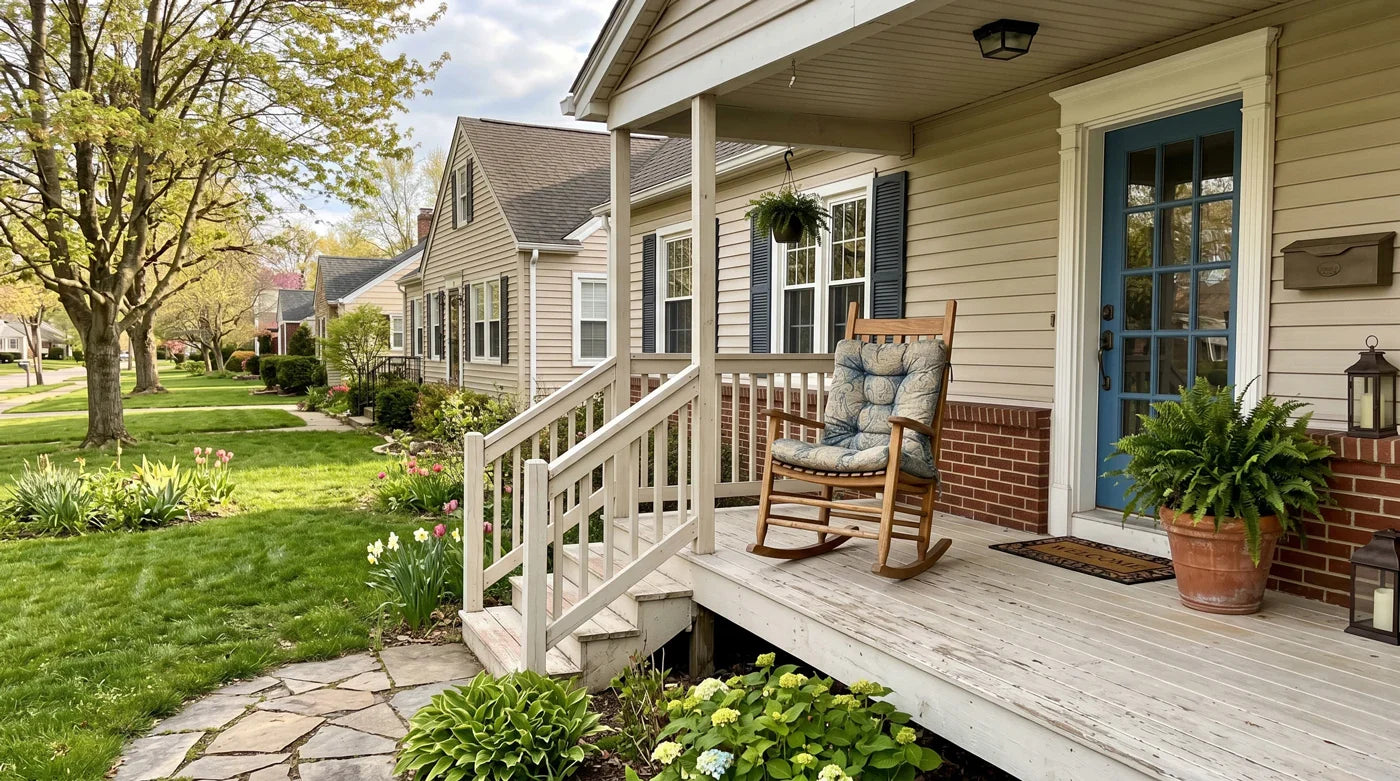
The answer to "where can I buy rocking chair cushions" is technically everywhere — big-box stores, Amazon, patio furniture chains, specialty cushion shops, discount home goods stores. The harder question is where to buy one that doesn't flatten in a season, slip off the chair every time you sit down, or fade to a washed-out version of itself by the end of summer. Those are different questions, and most of the obvious shopping destinations don't do well on them.
This breaks down the actual options — where they're strong, where they fall short, and what to look for in a rocking chair cushion before you commit to anything. The product category is deceptively simple on the surface. The variation in quality is significant.
Why Rocking Chair Cushions Fail Early
Most rocking chair cushions that get returned or replaced within a year fail for one of the same few reasons. Worth knowing these before shopping, because they're not obvious from a product listing.
-
Foam density too low Budget cushions almost universally use 1.2–1.5 lb/ft³ foam. It feels fine in the store and compresses noticeably within a few months of regular use. A rocking chair is used repeatedly in the same motion — the foam takes consistent pressure in the same spots and degrades faster than cushions on static seating. Density matters more here, not less.
-
No tufting or quilting to hold the fill in place Un-tufted cushions rely entirely on the fill staying evenly distributed. In a rocking chair, the forward-and-back motion gradually migrates loose fill toward the back or bottom of the cushion. After a few weeks, the seat is thin in the front and bunched at the back. Tufting — the stitched buttons or quilted pattern that sections the cushion — physically prevents this by anchoring the fill in place.
-
No ties, or ties that don't reach the chair A rocking chair's movement will shift any cushion that isn't secured to it. Cushions without ties, or with ties positioned for a generic chair that don't match the actual placement of the back rails and seat frame, slide out of position within minutes of sitting down. The tie configuration needs to match the chair, not just exist.
-
Surface-dyed fabric on an outdoor chair Rocking chairs often live on porches and patios — in partial or direct sun for hours each day. Surface-dyed fabric fades unevenly after a season of UV exposure. Solution-dyed acrylic, where color runs through the fiber rather than sitting on the surface, resists this significantly better. The difference is visually obvious by year two.
Where You Can Actually Buy Them — An Honest Breakdown
The shopping landscape for rocking chair cushions spans several distinct channel types. Each has a different profile of what you're likely to find and what trade-offs come with it.

What to Actually Look For
Across any channel, the same specs determine whether a rocking chair cushion is worth buying. Most listings don't make all of these easy to find, which is itself a signal about the product.
For outdoor rocking chairs
- Solution-dyed acrylic or high-grade polyester fabric — not described as just "polyester" with no UV resistance rating
- Foam density of at least 1.8 lb/ft³, or a high-resilience foam spec — should be stated explicitly in the listing
- Tufted or quilted construction — prevents fill migration in the rocking motion
- Ties included, ideally with multiple attachment points that match standard rocking chair rail placement
- Waterproof or water-resistant inner liner, not just surface treatment on the outer fabric
- A high back panel if the chair has a high back — a seat-only cushion on a high-back rocker leaves the upper back unsupported
For indoor or covered-porch rocking chairs
- UV resistance matters less in full shade, but moisture resistance still applies if the porch is open to humidity
- Softer fabric options (cotton blends, velvet, woven textures) work well indoors where weather exposure isn't a factor
- Tufting still matters — the rocking motion shifts fill regardless of indoor or outdoor placement
- Thicker is almost always better: 4–5 inches of seat depth provides substantially more sustained comfort than 2–3 inches
For a more detailed breakdown of how foam specs translate to seated comfort over time, the guide on foam density and cushion durability covers the technical side without overcomplicating it.
A Rocking Chair Cushion Worth Recommending
Most product roundups in this category pad the list to hit a number. This is one product worth looking at specifically, because it addresses the failure points above directly rather than incidentally.
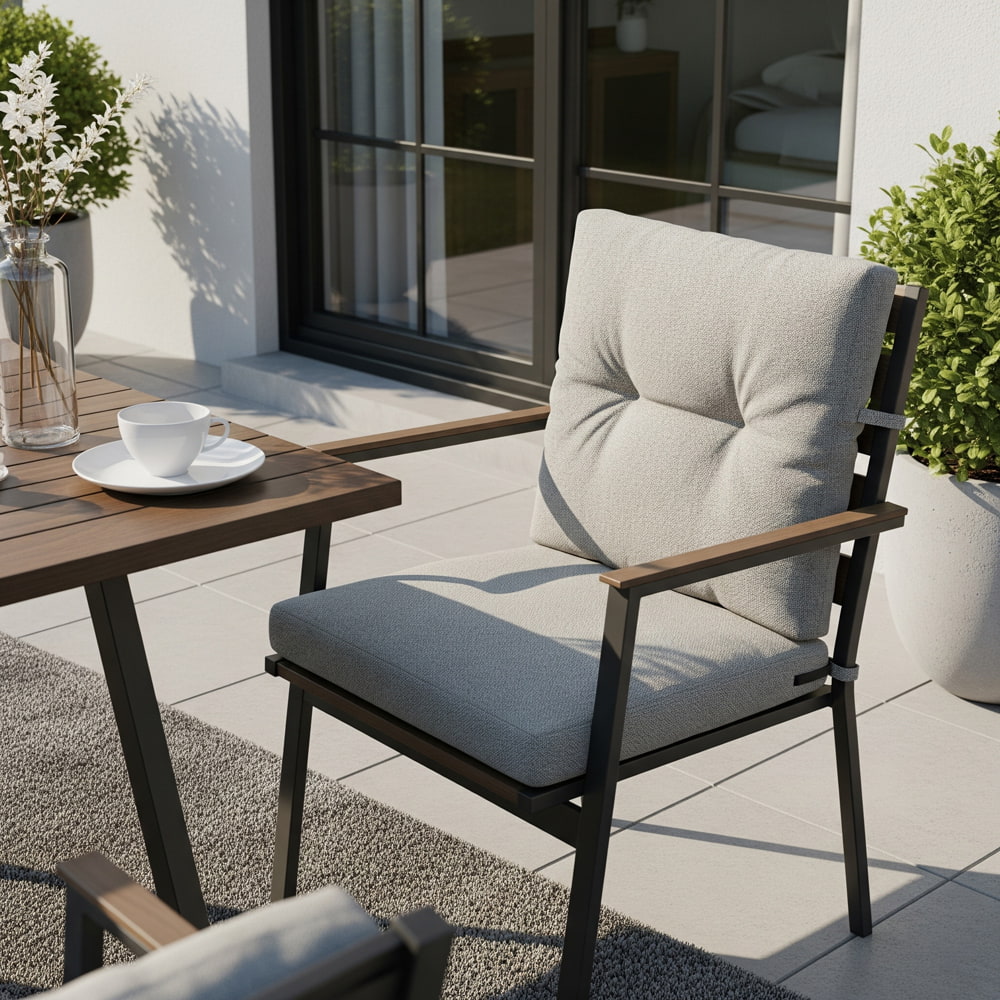
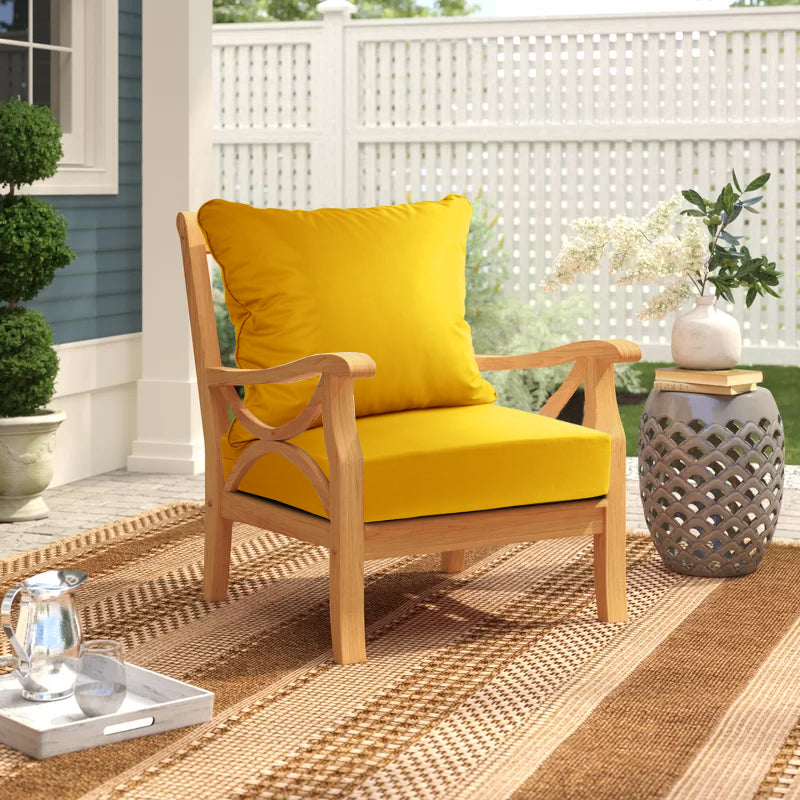
Designed for patio rockers, wicker chairs, and outdoor loungers — the seating types that take weather exposure seriously. The tufted construction does what it's supposed to: the stitched button grid keeps the fill anchored through the rocking motion, so the cushion stays even across the seat surface rather than migrating toward the back over weeks of use.
The fabric is engineered for outdoor conditions — waterproof, mildew-resistant, and UV-treated to resist fading through a full outdoor season. The high-back panel covers the full chair back rather than leaving the upper back exposed, which matters for extended sitting in a rocking chair more than in static seating. Available in Fresh Green, which holds its color well against direct sun.
At $97.58, it sits above the mass-market tier and below the designer-brand tier — in the range where material quality is meaningfully better than a $40 option without requiring the $200+ commitment of a furniture chain equivalent. Free shipping across the US.
- Tufted construction
- High-back panel
- Waterproof + mildew-resistant
- UV-fade resistant fabric
- Ties included
- Free US shipping

A Few Things Worth Knowing Before You Buy
Measure the chair, not just the cushion
Rocking chairs vary more in seat width and back height than most people account for. A "standard" rocking chair cushion is usually designed around a seat width of approximately 20–22 inches and a back height of 28–32 inches. Traditional ladder-back rockers, Adirondack-style chairs, and modern patio rockers all differ. Measure your chair's seat width, seat depth, and back height before ordering — the listing should specify what dimensions the cushion is designed for. A cushion that's two inches too narrow on a rocking chair seat is more noticeable and more uncomfortable than the same mismatch on a static bench.

Ties matter more on a rocker than on any other chair
The forward-and-back motion of rocking is continuous low-level force on the cushion in a consistent direction. Without ties — or with ties attached to points that don't match the chair's rail placement — the cushion walks backward on the seat over the course of a sitting session. Most good rocking chair cushions include ties at both the seat back and the seat front. Check the listing explicitly; "ties included" can mean two thin ribbons or four robust attachment straps, and the difference matters.
High-back vs. seat-only
Rocking chairs are used for extended sitting more than most other chair types — that's the point of the chair. A seat-only cushion that leaves the back of the chair bare works for short use but becomes uncomfortable in longer sessions. A high-back cushion that covers the chair's back panel provides the lumbar and upper back support that makes a rocking chair genuinely comfortable for an hour rather than fifteen minutes. According to guidance from the Spine-health foundation on ergonomic seating, consistent lumbar support during prolonged sitting significantly reduces the lower back strain that accumulates in chairs without back padding — a direct argument for the high-back option on a chair people actually rock in for extended periods.
$60 off orders over $300 · $125 off orders over $500
Applied automatically at checkout. No code needed.The Short Version
Buy from a channel that discloses material specs. Look for tufted construction, solution-dyed or UV-treated fabric, disclosed foam density, and ties that will actually attach to your specific chair. Avoid anything that describes the cushion as "soft" and "comfortable" without providing the specs that would tell you whether that's true in six months.
Rocking chairs get used. A good cushion is part of what makes that use pleasant rather than something you gradually stop doing because the seat isn't worth it anymore. The cushion is a small investment relative to the chair and a disproportionately large factor in whether the chair actually gets sat in.

The rocker's ready.
The cushion should be too.
Tufted construction · weather-resistant fabric · high-back coverage · free US shipping
$60 off $300+ · $125 off $500+ · Applied automatically at checkout


Leave a comment
All comments are moderated before being published.
This site is protected by hCaptcha and the hCaptcha Privacy Policy and Terms of Service apply.