
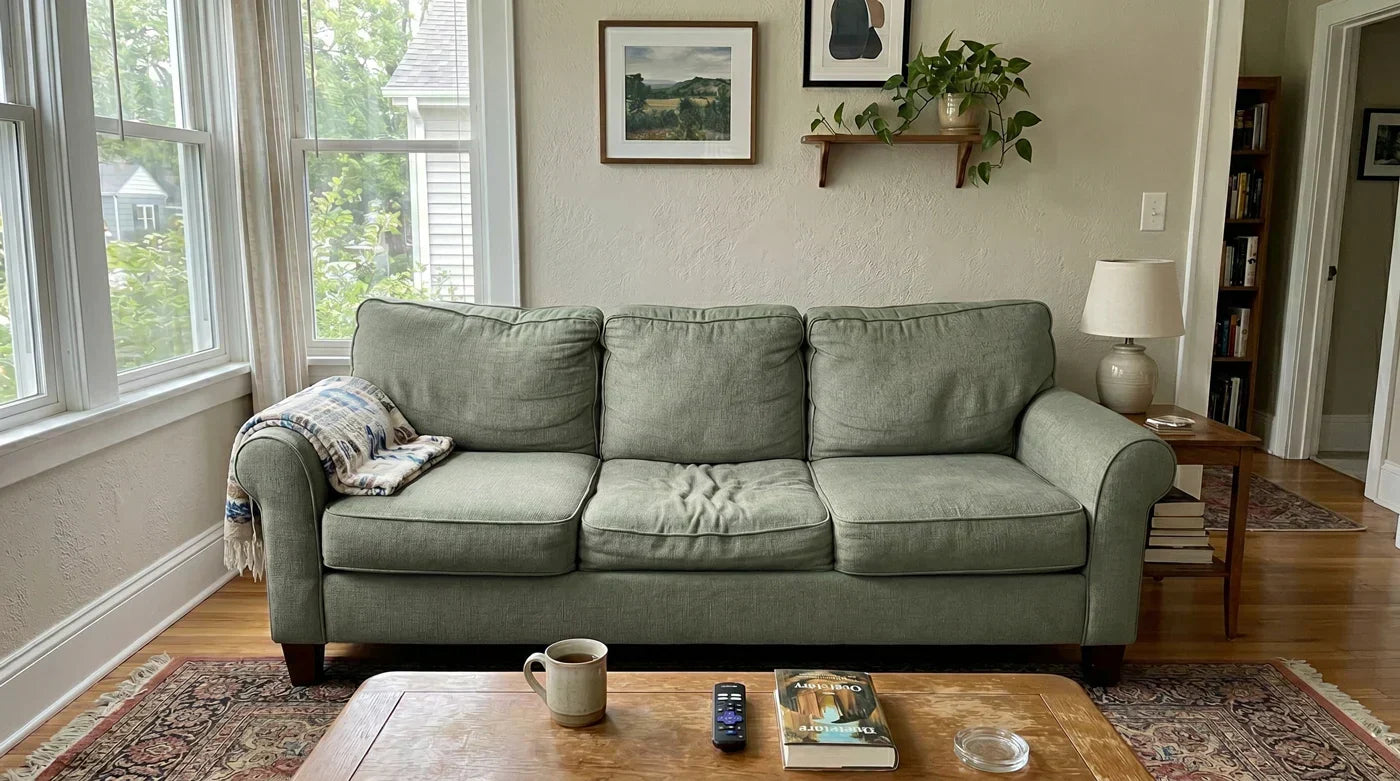
Your Sofa Isn't the Problem. The Cushions Are.
Most sofas get replaced for the wrong reason. The frame is still solid, the legs are fine, the dimensions work perfectly for the room — it's just the seat cushions that have quietly given up over the past few years. They've gone flat in the center, or lost their shape, or developed that permanent indent where you always sit. And because replacing a sofa feels like the obvious solution, that's what most people do.
It's usually not necessary. Cushion problems are cushion problems. They're fixable without touching the sofa itself, and the fix is often simpler — and cheaper — than most people expect going in. The part that's worth getting right is the diagnosis: different problems have different solutions, and reaching for the wrong one wastes both time and money.
This breaks down the actual options, what each one involves, and how to decide which path makes sense for your situation.
First, Figure Out What's Actually Wrong
Before anything else, it helps to know whether you're dealing with a foam problem, a fill problem, or a cover problem. They look similar from the outside — the cushion just seems "off" — but the fix is completely different depending on which one it is.
If you're not sure, press down on the cushion and release. Good foam springs back within a second or two. Foam that recovers slowly, or barely at all, has lost its resilience and is overdue for replacement. A cushion that feels fine compressed but lumpy or uneven at rest usually has a fill problem.
Option 1 — DIY Foam Replacement
This is the most thorough fix for a compression problem, and for people who are comfortable doing it, it works well. The basic process isn't complicated. The parts that trip people up are foam selection and getting the cut right.
What the process actually involves
- Remove the cushion cover (most have a zipper along the back or bottom seam) and pull out the existing foam insert.
- Measure the insert — width, depth, and height — not the cushion cover, which has some stretch built in. The foam should be cut slightly larger than the cover dimensions to give the cover a full, taut look.
- Order or source foam cut to size. Most foam suppliers will cut to your dimensions for a small fee, which is worth it — cutting high-density foam at home without a proper blade produces uneven edges that show through the cover.
- If the original cushion had a fiber wrap around the foam (a layer of Dacron batting that softens the edges and adds a bit of loft), replace that too — it's inexpensive and makes a visible difference in how the finished cushion looks.
- Feed the new foam insert into the cover, ease the corners in carefully, and zip closed.
Choosing the right foam density
This is where most DIY attempts go wrong. Foam density and firmness are different specs — density is the weight per cubic foot (affects durability), firmness is the ILD rating (affects how it feels underfoot). For seating, both matter.
| Density | Best for | Expected lifespan |
|---|---|---|
| 1.5 lb/ft³ | Light use, guest rooms, occasional seating | 2–3 years |
| 1.8 lb/ft³ | Regular daily use, standard sofas | 4–6 years |
| 2.0 lb/ft³ | Heavy daily use, primary seating | 6–10 years |
| 2.5 lb/ft³+ | Commercial, high-traffic, or heavy users | 10+ years |
For a sofa that gets daily use from adults, 1.8 lb/ft³ is the minimum worth buying. Going lower is how you end up back in the same situation in two years. The full breakdown on sofa foam types and specs covers ILD ratings and wrap options in more detail if you want to get into the specifics before ordering.

Option 2 — Just Replace the Cover
If the diagnosis above pointed to a cover problem — not the foam — this is the simplest and cheapest path. A new cover on a cushion with good foam underneath looks and feels exactly like a new cushion, at a fraction of the cost.
When this works
Press the cushion. If it springs back quickly and still feels supportive, the foam is fine. If the cover is pilling, fading, has a broken zipper, or has a stain that won't come out, a cover swap is all you need. Many sofa manufacturers sell replacement covers, though availability depends on the brand and how long ago the sofa was made. Third-party slipcover and custom cover makers are a more reliable option for older sofas or discontinued lines.
When it doesn't work
If the cushion has already lost its shape, a new cover won't fix the underlying foam problem — it'll just be a new cover on a flat cushion. Worth ruling out the foam issue first before spending on covers.
Option 3 — Custom Replacement Cushions
For situations where the DIY path is too involved, or the sofa's cushion dimensions aren't standard enough to source foam easily, or the existing cover is also past its useful life — a fully custom replacement cushion is often the most direct solution.
Where this makes the most sense
Older sofas with non-standard cushion sizes are the primary case. Sofa manufacturers don't publish specs, and foam cut to a specific width and depth by hand often has enough variation to affect the fit. A custom cushion made to your exact measurements — foam spec, size, and fabric — arrives ready to use with no assembly.
It's also the cleaner option when the problem is a cushion on something that isn't really a sofa — a built-in bench seat in a living room, a window seat that's been functioning as a couch, a daybed, or a loveseat with dimensions that don't match any standard replacement product. For these, off-the-shelf options on both sides of the bench/sofa divide are the wrong shape or wrong size. Custom is the only path to something that actually fits.
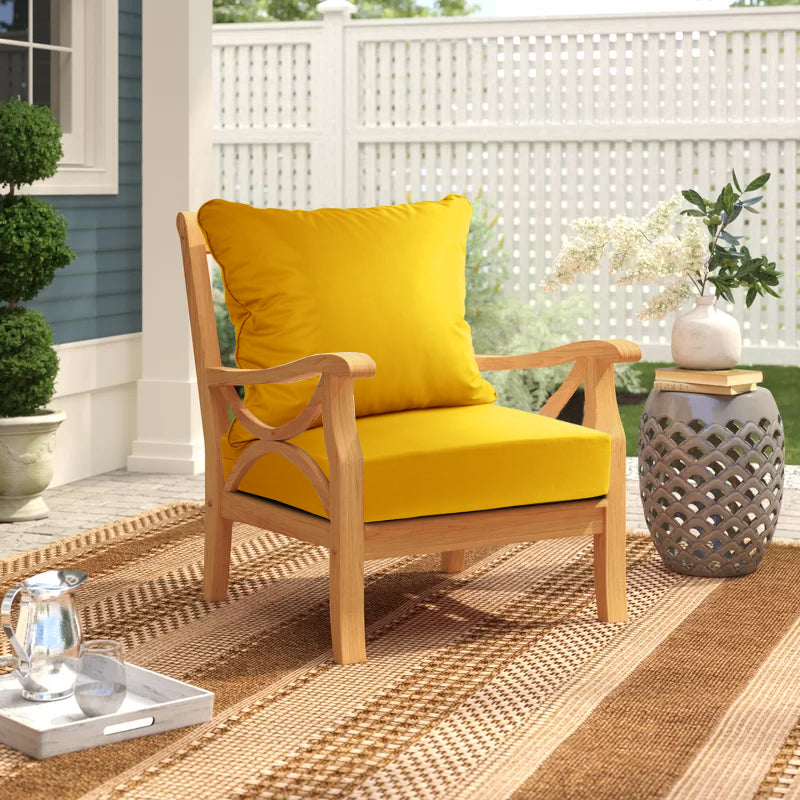
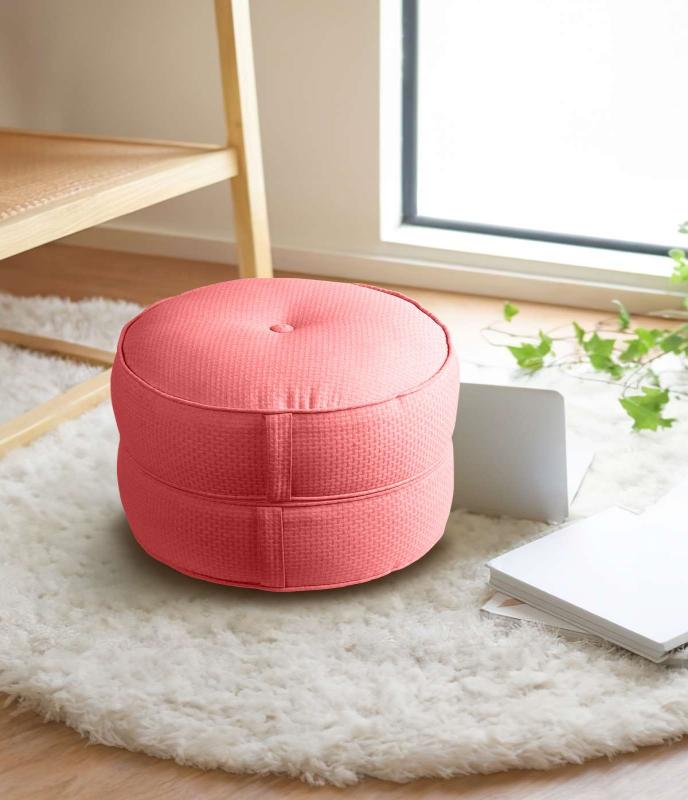
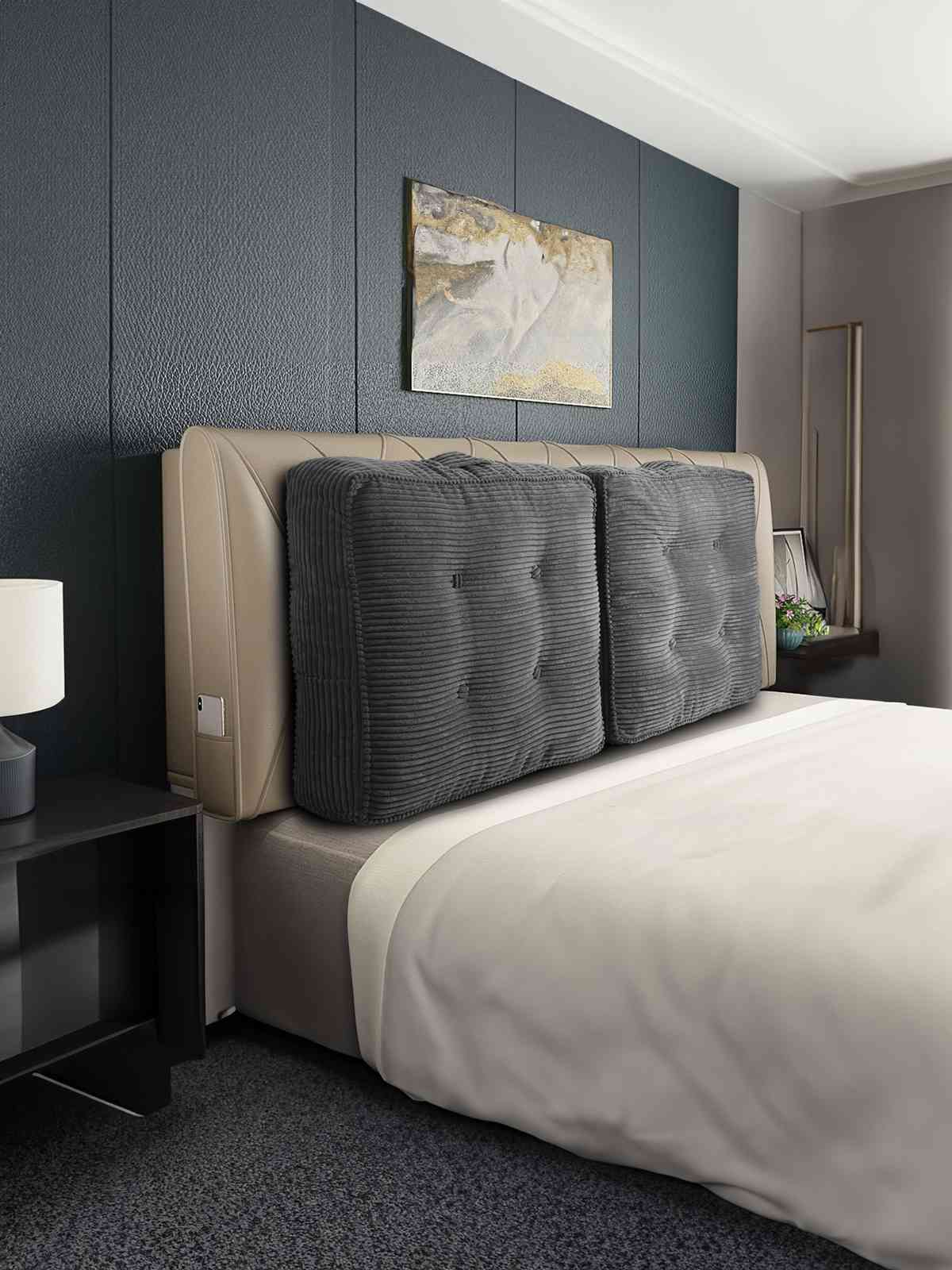
Our custom tufted cushions and full custom cushion range are made to the dimensions you provide, in your choice of fabric and fill. For seat-style replacements — firmer, structured, holding their shape over time — the specs are similar to what you'd be looking for in a DIY foam project, but without the sourcing, cutting, and assembly steps.
$60 off orders over $300 · $125 off orders over $500
Applied automatically at checkout. No code needed.
The Decision You're Actually Making
Three questions narrow it down:
| If... | Then... |
|---|---|
| Foam is gone, cover is fine, dimensions are standard | DIY foam replacement is the most cost-effective fix. Source 1.8–2.0 lb density, add a fiber wrap, ease back into the existing cover. |
| Cover is worn or damaged, foam still feels good | Cover replacement only — check with the manufacturer first, then third-party options if the line is discontinued. |
| Dimensions are irregular, or the seat isn't a standard sofa at all | Custom cushion is the direct path. No assembly, no sourcing — just the finished cushion in your exact size. |
| Foam is gone and you'd rather not deal with the process | Custom replacement cushion handles the whole thing. Comparable cost to quality foam + labor, without the variables. |
| The sofa itself is structurally damaged — broken springs, frame issues | This is the one case where cushion replacement won't solve it. A cushion on a broken frame still feels broken. |
Most people reading this fall into the first or third scenario. The sofa's frame is fine, the problem is specifically the cushions, and the solution is either sourcing the right foam or ordering a replacement that fits. Either way, the sofa stays.
According to the American Home Furnishings Alliance, a well-made sofa frame can last fifteen years or more — it's the upholstery and cushion fill that typically degrades first. Replacing cushions instead of the whole sofa is both the more economical and more sustainable choice in most cases, and it's worth doing properly rather than reaching for the cheapest foam available and repeating the process in two years.

The sofa is fine.
Let's fix the cushions.
Custom sizing, fabric, and fill — built to the dimensions you actually have.
$60 off $300+ · $125 off $500+ · Applied automatically at checkout





Leave a comment
All comments are moderated before being published.
This site is protected by hCaptcha and the hCaptcha Privacy Policy and Terms of Service apply.