

Plenty of houses already have the seating built in. An entryway bench by the door. A window ledge deep enough to sit on. An L-shaped nook tucked next to the kitchen table. And yet, walk through a lot of American homes and those exact spots have quietly become the place where bags get dropped, or where nobody ever actually sits.
It's rarely the space itself that's the problem. It's that a standard cushion — the kind sized for an "average" bench that doesn't really exist — was never going to fit a built-in seat, an angled bay window, or an L-shaped corner properly. A custom bench cushion solves that by being built around your space, instead of asking your space to work around a standard cushion. That one shift changes almost everything about how these rooms actually get used.

Start With the Space, Not the Cushion
Most people shop for bench seating the old way: pick a color, pick a fabric, maybe think about piping. That order makes sense for a sofa you're buying off a showroom floor. It doesn't work nearly as well for a bench that's already attached to your wall.
For built-in and custom seating, the order really should flip:
Space → Use → Size → Comfort → Fabric → Style
Fabric and finish are the last decisions, not the first — and that's exactly the order this guide follows. First, figure out which of these four spaces you're actually working with.
1. Entryway Bench — Make the First Space in Your Home More Useful
A wooden or storage bench by the front door is common in American homes, and it's often one of the least comfortable seats in the whole house. Standard cushions frequently miss here in three specific ways: they don't quite match the bench's real dimensions, they slide every time someone sits down to pull on boots, and — maybe the biggest one — they end up looking like an afterthought on top of what's really a storage box.
A custom bench cushion for an entryway is really solving three practical problems, not a styling problem:
- Fit — covering the seating surface edge to edge, including any lip or overhang on a storage bench
- Stability — ties, straps, or a non-slip base so the cushion stays put through the daily on-again-off-again shoe routine
- Everyday durability — a fabric and foam combination that can take dropped bags, wet boots, and kids sitting down without care, without falling apart in a season

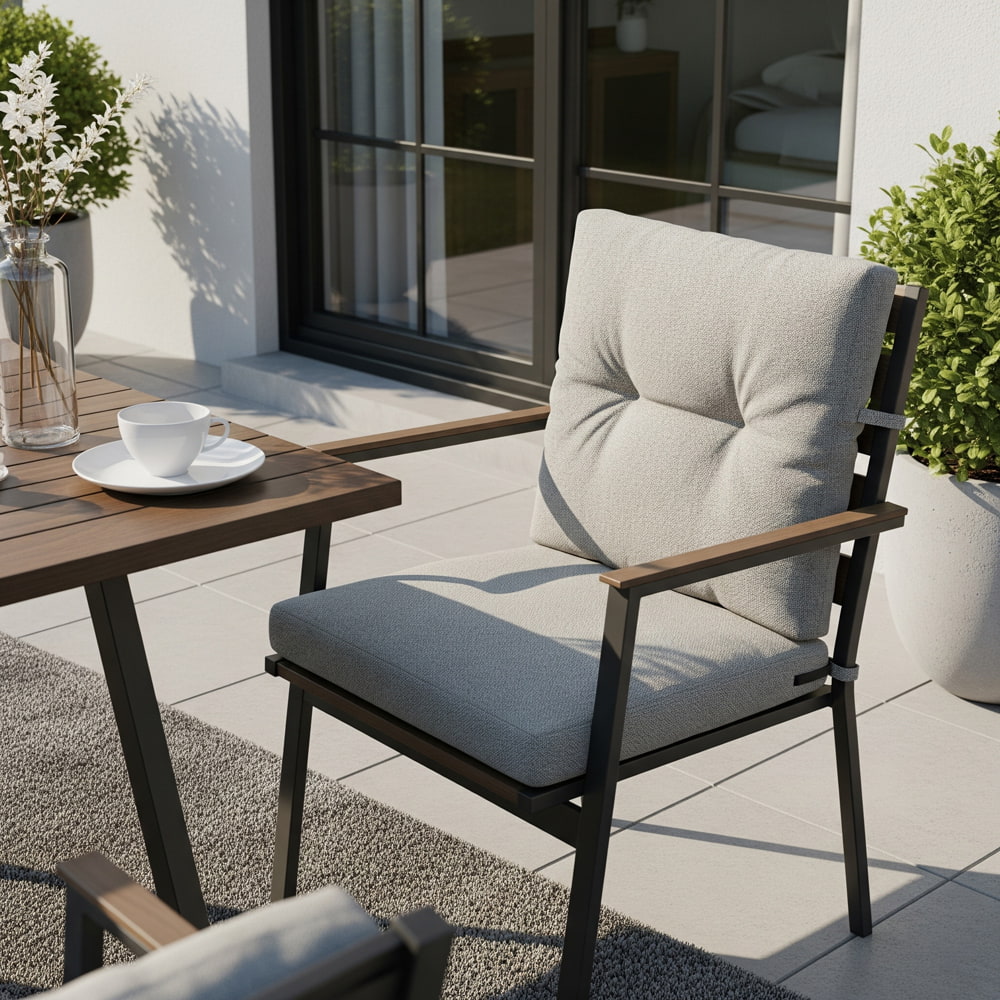
2. Breakfast Nook — Make Built-In Dining Seating Actually Comfortable
Breakfast nooks raise the stakes a bit, because people don't just perch here for thirty seconds like they do at an entryway — they sit through actual meals. And the seating itself is almost never a simple rectangle. L-shaped, U-shaped, wall-to-wall, non-standard depth to fit around a table someone already owned — breakfast nooks get built to match the kitchen, not to match a cushion catalog.
That's exactly why generic cushions struggle here. A pack of standard pads from a big-box store is sized for a generic rectangle, and a breakfast nook rarely is one. The result is gaps at the corners, a seat that's too shallow for the table height, or padding that just doesn't sit right against dining-height seating.
If your seating is an L-shape, a U-shape, or has corners and angles to account for, our guide to measuring a breakfast nook or banquette walks through it section by section — this article stays focused on why the space calls for custom in the first place.
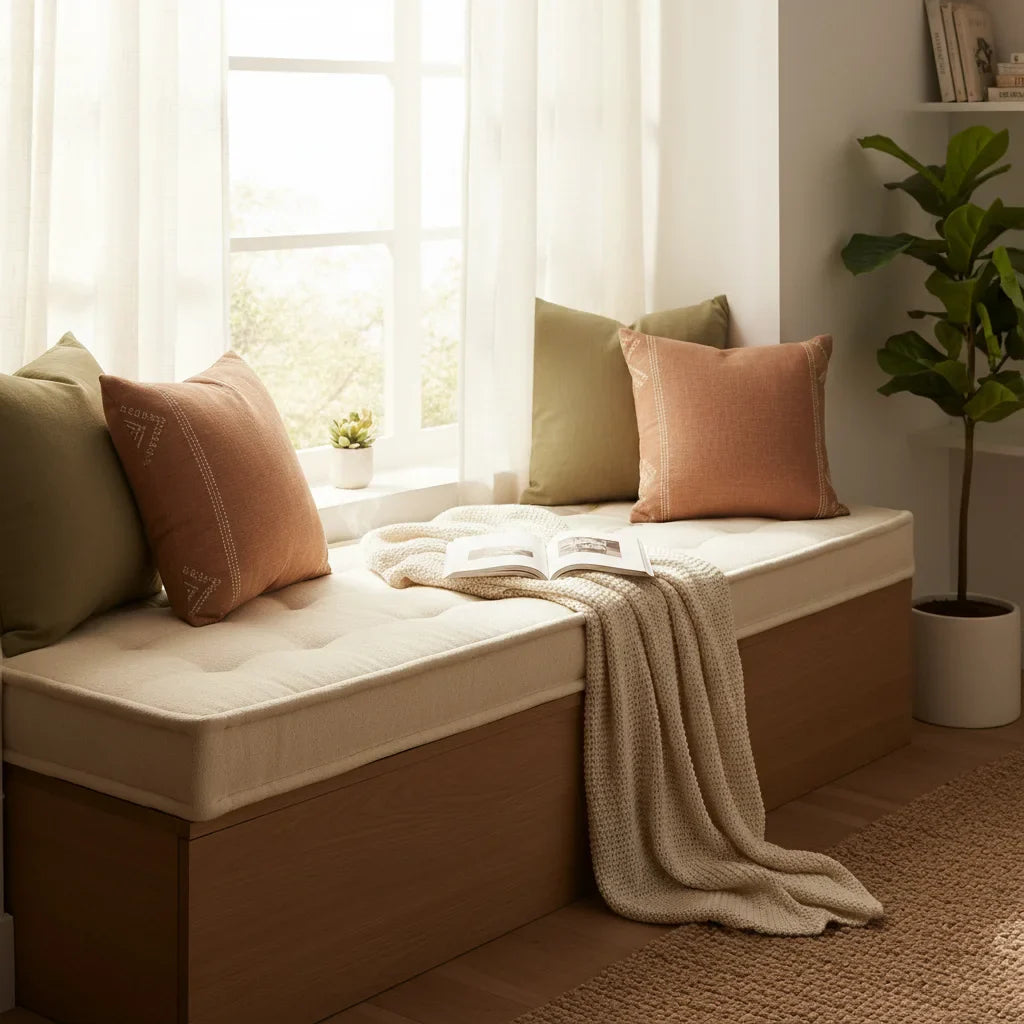
3. Window Bench — Turn an Architectural Feature Into a Real Seat
This is the scenario where the mismatch is the most visible. A bay window, a trapezoid-shaped ledge, an angled wall, or a window seat that's deeper than a standard bench — these are architectural features the house already gave you, and a rectangular off-the-shelf cushion almost never respects the shape. You end up with gaps along the sides, a front edge that overhangs into the room, or a cushion that just looks bolted on rather than built in.
The right way to think about it: the cushion should follow the architecture, not the other way around. If your window seat is anything other than a plain rectangle, our full custom window seat measurement guide covers the details, and for genuinely angled bay windows, our bay window and trapezoid cushions are built specifically for that shape rather than adapted from a rectangle.

4. Reading Corner — Turn an Empty Corner Into a Place You Want to Stay
Reading corners are a slightly different problem than the first three. It's rarely a shape mismatch — a built-in bench, a window ledge, or an alcove seat can technically already hold a cushion just fine. The issue shows up after ten minutes, not immediately: it's hard, or it's fine for a quick sit but genuinely uncomfortable for the hour you actually wanted to spend there with a book.
For this space, fit alone isn't the priority — comfort over a longer sitting session is. That means paying more attention to thickness, seat depth, and support than you would for an entryway bench, plus considering a back pillow or two if the wall behind isn't already padded. We won't get into foam density here — that's really its own topic — but if you're furnishing a dedicated reading nook, our reading nook cushion options are built with exactly that longer-sitting-session comfort in mind.

Which Custom Bench Cushion Fits Your Space?
| Space | Main Problem | Priority |
|---|---|---|
| Entryway Bench | Hard, unfinished seating | Fit + stability |
| Breakfast Nook | Non-standard built-in size | Fit + seat height |
| Window Bench | Unique architecture | Shape + measurement |
| Reading Corner | Long sitting time | Comfort + thickness |
Why Standard Bench Cushions Often Don't Work
To be fair to standard cushions — they're not a bad option across the board. If your bench happens to measure a common size like 36×18, 42×18, or 48×18 inches, a ready-made cushion can be a perfectly reasonable, faster choice. There's no need to overcomplicate a bench that a standard product genuinely fits.
Where custom earns its keep is everywhere that math doesn't work out cleanly:
- Built-in seating that was constructed to fit the room, not a catalog size
- Wall-to-wall benches with no clearance to spare on either end
- Bay windows and other angled or non-rectangular shapes
- Unusual depth — deeper or shallower than a standard bench cushion assumes
- L-shaped breakfast nooks with corners a rectangle can't cover
- Non-standard lengths that fall between typical sizing tiers
- A specific finished seat height you're trying to hit, once the cushion is added
If you recognize your bench in that second list, that's a genuine signal — not a sales pitch — that custom is the more sensible route. Right now, orders over $300 get $60 off automatically at checkout, and orders over $500 get $125 off, which is worth factoring in if you're outfitting more than one of these spaces at once.
How to Choose the Right Custom Bench Cushion
1. Measure the Actual Seating Surface
Start with length, depth, and shape — measured from the bench itself, not an old cushion that may have flattened or shifted over time. For anything beyond a simple rectangle, our measurement guides for banquettes and breakfast nooks and window seats go into the exact steps.
2. Choose Thickness Based on How You Use the Space
An entryway bench, used for short sits, doesn't need the same thickness as a reading nook meant for an hour with a book. Breakfast nooks sit in between, constrained by dining table height as much as comfort preference.
3. Choose Fabric for the Room
Entryways need everyday durability. Breakfast nooks need to handle spills without drama. Window benches see direct sunlight, so fade resistance matters more than it would elsewhere. Reading corners can prioritize softness and feel over heavy-duty performance.
4. Decide How the Cushion Should Stay in Place
Ties, a non-slip bottom, or velcro fixing points all solve the same problem in different ways — worth deciding before you finalize your order rather than after the cushion starts sliding around.
5. Add Finishing Details Last
Piping, color, and decorative style come at the very end of this list on purpose. They matter, they're just not what determines whether the cushion actually works in your space.
Choose Your Cushion by Space
One Custom Cushion Category, Four Different Solutions
Frequently Asked Questions
What thickness is best for a custom bench cushion?
It depends on the space — short-sit spots like an entryway can go thinner, while a reading nook or dining bench generally benefits from more support. There's no single right number for every bench.
How do I measure a built-in bench for a cushion?
Measure the actual seating surface, not an old cushion, and note the shape carefully if it isn't a plain rectangle. Our banquette and window seat guides linked above cover the full process for corners, L-shapes, and angled seats.
Can I order a cushion for an unusual-shaped bench?
Yes — that's really the whole point of going custom. Trapezoids, L-shapes, and non-standard depths are exactly the cases where a made-to-measure cushion outperforms anything off the shelf.
Are custom bench cushions worth it for a breakfast nook?
Usually, yes, specifically because breakfast nooks are rarely simple rectangles and get used for longer sitting sessions than most other benches in the house.
What is the best cushion for a window seat or reading nook?
One that matches the actual shape of the ledge and prioritizes comfort for longer sitting, rather than a generic rectangular pad chosen mainly for price.
Ready to Make Your Space Work?
Whichever of these four spaces sounds like yours, the goal is the same: a cushion built around what you actually have, not a size you have to compromise around. If you'd rather build one yourself, our DIY custom bench cushion tutorial walks through that process step by step. If you'd rather send us your measurements and let our team handle the rest, that's exactly what we do every day.

Measure your space, tell us what you're working with, and we'll help you figure out which of the four solves your particular problem.




Leave a comment
All comments are moderated before being published.
This site is protected by hCaptcha and the hCaptcha Privacy Policy and Terms of Service apply.