
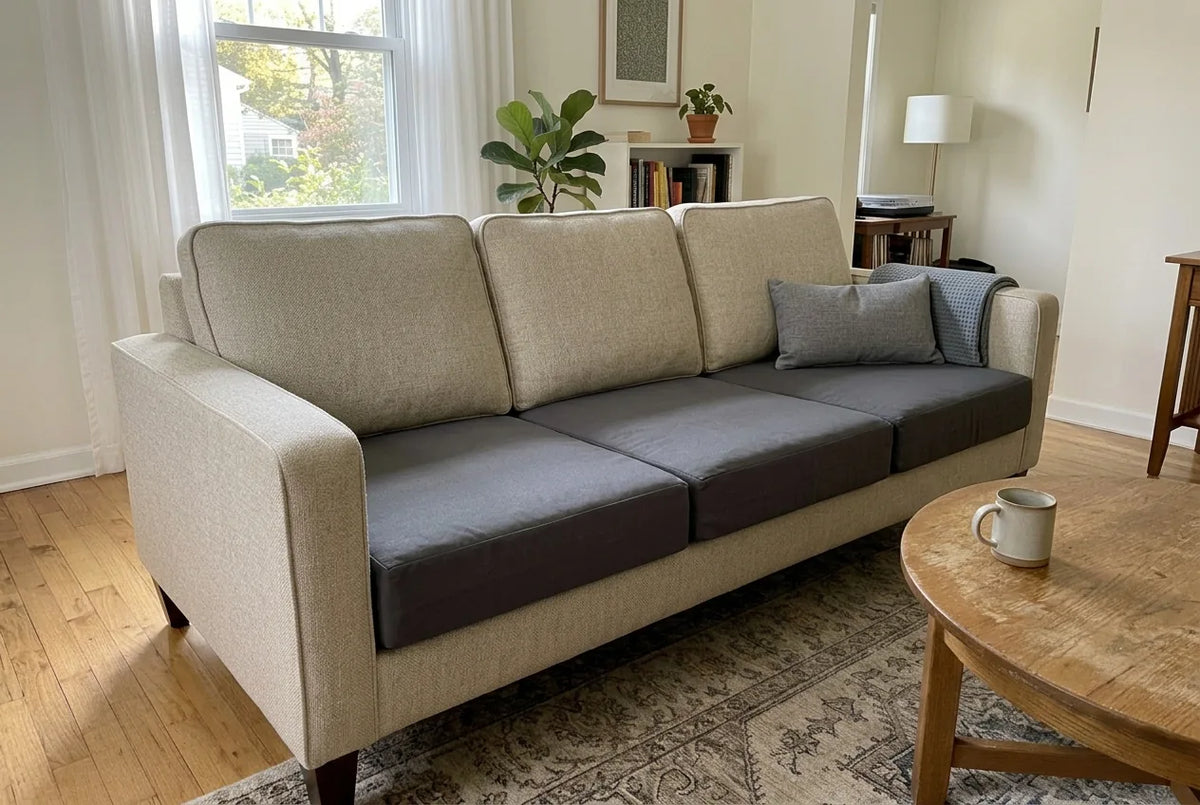

You know that moment when you pull the old cover off a seat cushion, hold the foam up, and realize you have no idea what size it actually is? That's where most replacement projects start. The zipper died, the dog got to a corner, or the fabric just looks tired, and now you're searching for custom cushion covers with a tape measure in one hand and a vague hope in the other.
Here's the thing about covers: one inch off looks like five. Too tight and the zipper fights you the whole way. Too loose and you get wrinkles that no amount of fluffing will fix. The good news is that measuring for replacement cushion covers takes about ten minutes once you know what to measure and in what order. This is how we'd do it if the cushion were sitting on our own workshop table.
01Start with the insert, not the old cover
If you can get the cover off, measure the foam (or whatever fill is inside). The old cover is a poor ruler. Fabric stretches over years of sitting, seams relax, and a cover that was washed and dried on high heat may have shrunk a little. The insert is the one thing that stays the shape it is, so it's your starting point for any made to measure cushion covers order.

Foam on the left, tired cover on the right. Only one of them tells the truth about size.
Use the old cover as a sanity check, though. Lay it flat and measure seam to seam. If the numbers land within about half an inch of the foam, nothing weird is going on. If they're way off, trust the foam. And if the cover is sewn shut and you can't reach the insert at all, measure the outside of the whole cushion, treat the numbers as approximate, and mention that when you place the order.
02Width × depth × thickness, the way it's meant to be done
Set the cushion on a flat, hard surface (the floor works fine) and let it sit without anything pressing on it. Then take three numbers:
| Dimension | Where to measure | Watch out for |
|---|---|---|
| Width | Side to side along the front edge, the direction you'd sit across | Measure at the front, middle and back, and use the widest reading |
| Depth | Front to back, straight down the middle | Don't measure on an angle, and note any tapered or curved sides |
| Thickness | Top to bottom at the edge, then again in the center | Don't press the tape down into the foam, just let it rest |
Write them as W × D × T every single time. I know that sounds fussy, but swapping width and depth is one of the most common slips we see, especially on square-ish seat pads where the two numbers are close. Measure to the nearest 1/8 inch and don't round up to the next whole inch "to be safe." Rounding up is how a snug fit turns into a baggy one.
If the cushion has rounded or cut corners, measure the longest point in each direction and tell the maker about the shape. Same goes for custom bench cushion covers where the cushion tucks around a post or runs into a wall angle.

03Compressed foam after a long summer of use
Foam that has been sat on for years doesn't stay the thickness it started at. The center sinks, the edges hold up a bit better, and the top turns slightly domed or dished. So which number do you give?
Measure the thickness in two places, at the firmest edge and in the middle. If the difference is small, around a quarter inch, you're fine and the cover will smooth it out. If the middle has dropped by half an inch or more, a new cover will just wrap around a dent. It can't plump dead foam. Here's a quick test: press your palm into the middle and let go. Foam that's still healthy springs back within a couple of seconds. Foam that stays dented or comes back slowly is telling you something, and our breakdown of replacement cushion covers vs new foam goes through how to decide.

04How tight should a replacement cushion cover be?
Snug. Not strained, not floppy. A well-fitted cover usually sits slightly smaller than the foam in width and depth, commonly somewhere around half an inch to an inch, so the foam pushes out into the corners and the sides look full instead of sagging. The exact amount depends on the fabric, how thick the cushion is and how firm the foam feels.
Fabric stretch is a big part of this. A woven outdoor fabric hardly gives at all, so it needs a tighter, more exact fit and a little less "squeeze." A fabric with some give is more forgiving. If you're still choosing, our notes on cushion fabric cover how different fabrics behave.
One warning, though. Don't subtract that half inch yourself unless the instructions ask you to. Double-subtracting is a classic way to end up with a cover that's tiny, and then the zipper is under constant stress. Give the true insert measurements and let the size rules do their job.
05Boxed cushion vs knife-edge: two different sets of numbers
A boxed cushion has a strip of fabric (the boxing or gusset) running around the sides, so the top and bottom are separate flat panels and the corners are square. For these you need all three numbers, and the thickness number matters a lot because it sets the height of that side panel. Most couch seat cushions and thicker bench pads are boxed, which is why custom couch cushion covers and custom sofa cushion covers nearly always ask for thickness.
A knife-edge cover is simpler. Two panels, one seam around the edge, no side strip. The edge comes to a soft point. It works well for thin pads, back cushions and pillows, where thickness is small and width and depth do most of the work. Put a knife-edge cover on a very thick piece of foam and you'll get a rounded, pillowy edge instead of a crisp one, which some people love and others didn't plan on.

Boxed on the left (sides you can see), knife-edge on the right (one seam, softer edge).
06Zipper placement and a smooth install before Thanksgiving hosting
Zippers don't change your measurements, but they absolutely change how the cover goes on. A zipper along the back edge hides well on a sofa seat or a bench pushed against a wall, and it's the usual choice. A zipper that wraps around a corner and a bit of the side (an L-shape) opens wider, which helps a lot with thick, firm foam.
Think about where the cushion sits and how you use it. If you flip the cushion over, a zipper on one face would show, so choose accordingly. If the cushion is up against a window or wall, a back zipper is out of sight and out of mind.
And a small trick for installation: slide the foam into a large plastic bag first, push it into the cover, then pull the bag out through the zipper opening. The foam slides in instead of dragging and bunching the fabric. Do this a few days before guests come over, not an hour before, since you'll want time to square the corners.

07Cover only, or the whole cushion? A fall refresh decision
Replace just the cover when the foam still has its shape: it springs back after the palm test, there's no crumbling or yellow powder, no odor that won't go away, and the cushion still feels supportive when you sit. That's the best-value case for custom cushion covers, since you refresh the look without paying for new foam.
Replace both when the foam stays flattened after you stand up, when it's gone soft or lumpy, or when it's starting to break down. Putting a fresh cover on worn-out foam is a bit like a new case on a dying phone. It looks better, but it won't feel better. If you're somewhere in the middle, a cover-only swap now and new foam later is perfectly sensible. Just keep your measurements, since the cover will still fit properly if the new foam matches the old size.
08Common measurement mistakes (we've seen all of them)
- Measuring the old cover instead of the foam. Covers stretch and shrink, so they lie to you.
- Assuming all cushions are the same. Even when their sold as a set, a left, middle and right cushion can differ by a quarter inch or more. Measure each one and label them.
- Swapping width and depth. Pick an order (W × D × T) and keep it.
- Measuring thickness with weight on it. Take the cushion out and let it rest.
- Rounding up. A 20¼ inch cushion is not a 21 inch cushion.
- Forgetting the shape. Rounded corners, tapers and cut-outs need to be mentioned, not guessed.
- Entering the cover size where the form asks for insert size. Read the field label twice. Our measuring guide shows exactly which dimension goes where.
Current store offer
$60 off orders over $300 · $125 off orders over $500
09Before you order: a two-minute checklist

Foam out and on a flat surface. Width, depth and thickness written down in W × D × T order, to the nearest 1/8 inch. Each cushion measured on its own. Shape and zipper position noted. If any of that feels uncertain, measure again tomorrow with fresh eyes. It's boring advice, and it works.
Once the new covers are on, look after them. Polyester covers especially can shrink or lose their shape if they're washed too hot, so our guide on how to wash polyester couch cushion covers is worth a read before the first wash.
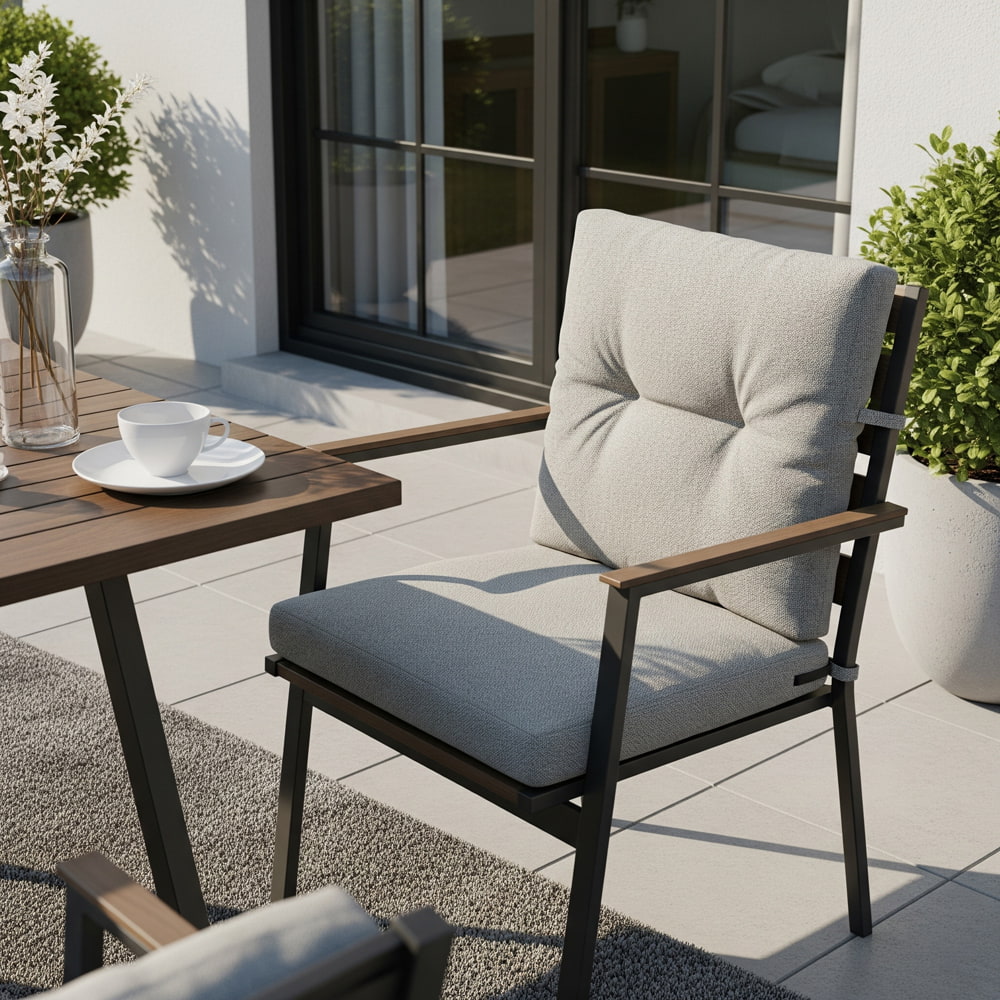
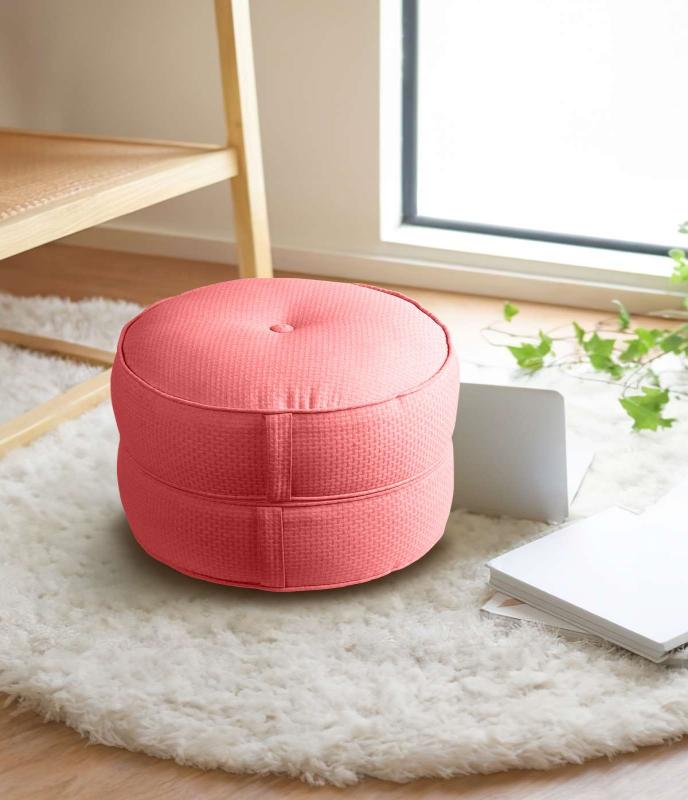
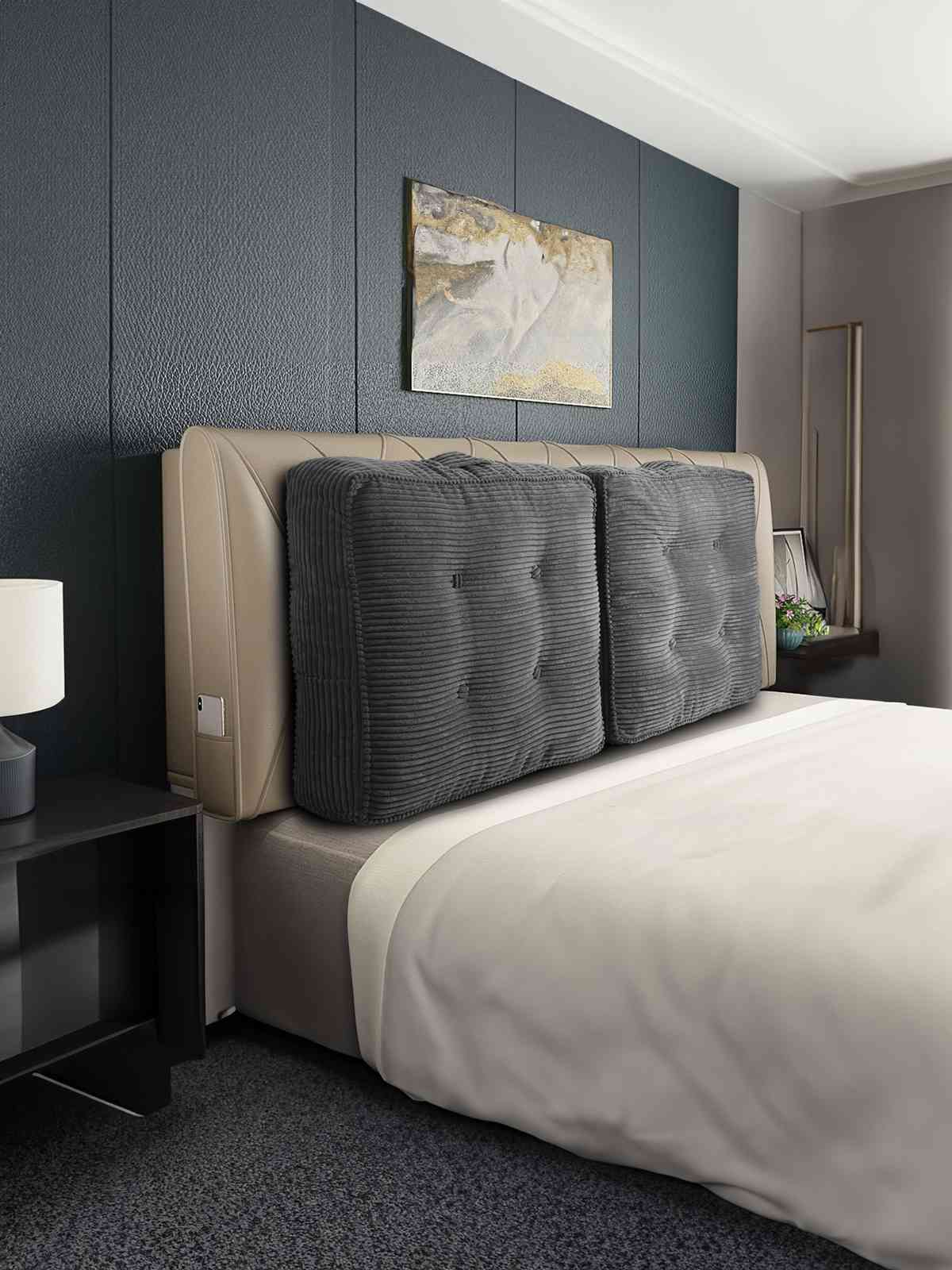
Here are three made-to-order options to look at if you're ready to start with your numbers:


Not sure which of your numbers to enter, or whether your foam is worth keeping? Send us a quick message with your measurements. We'd rather double-check with you than have you wait on a cover that doesn't fit. You can browse every option in our Custom Cushion Covers collection whenever you're ready.





Leave a comment
All comments are moderated before being published.
This site is protected by hCaptcha and the hCaptcha Privacy Policy and Terms of Service apply.