
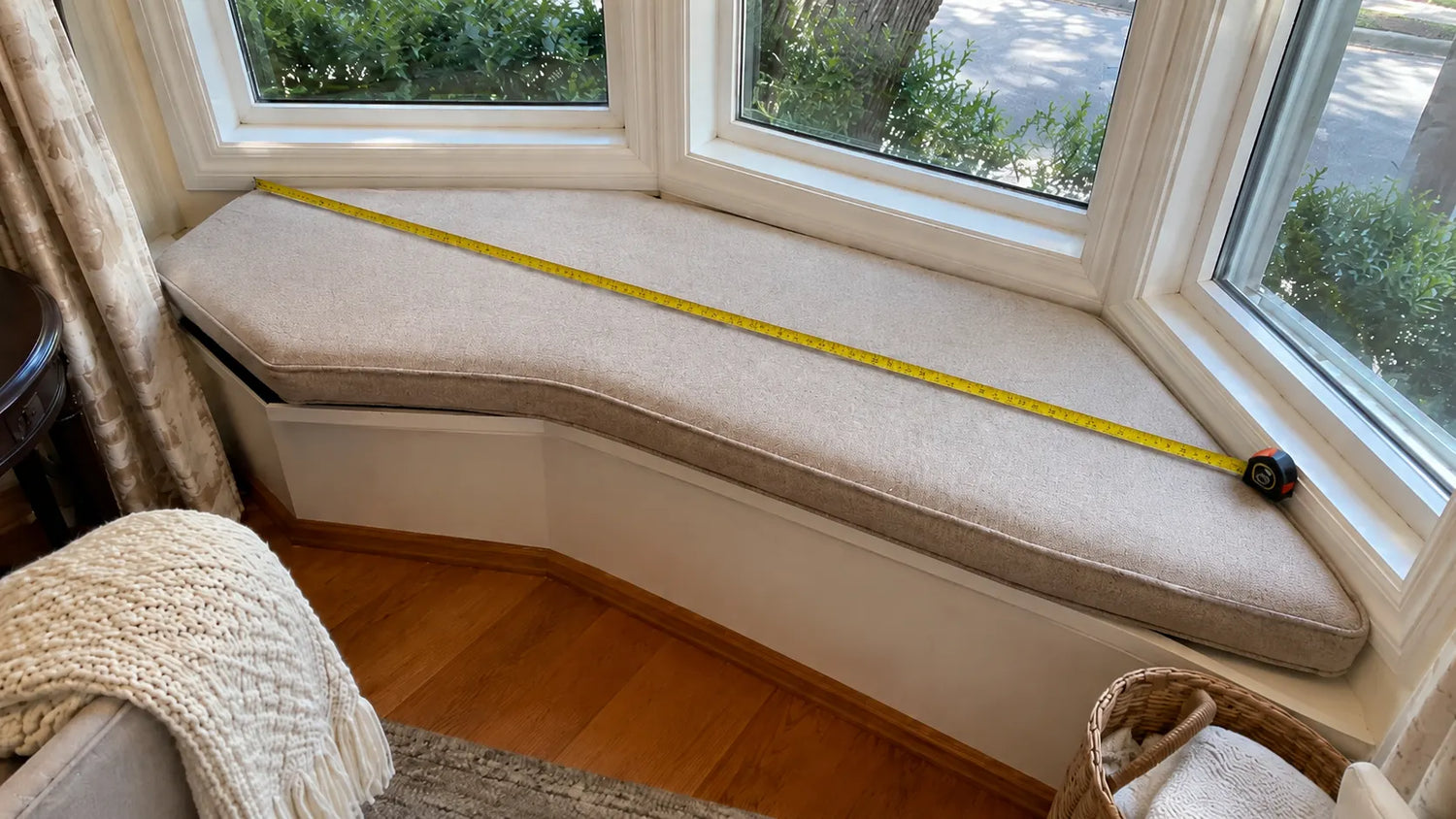
A few weeks back a customer sent us a photo of a cushion that didn't fit — off by almost an inch on one side because her bay window isn't actually a "true" trapezoid. Happens more than you'd think.
If you've got a window seat, chances are it's not a plain rectangle. Bay windows, bow windows, alcoves with slightly out-of-square corners — they're all a little different, and that's exactly why so many people give up on "standard size" cushions and go custom in the first place. The good news is that measuring one properly isn't complicated once you know what to actually pay attention to. It just takes a few extra minutes and the right order of steps.
We build a lot of these at Rulaer, from simple straight benches to five-sided bay window nooks, so this is the same process our own team walks customers through before cutting foam. Let's get into it.
Measuring Your Window Seat: Get This Part Right First
Everything else in this guide — thickness, foam, fabric — depends on an accurate measurement. Rush this step and nothing downstream will fix it.
How do you measure a bay window seat with angles for a custom cushion?
Treat each flat panel of the seat as its own separate rectangle, then measure the angles where panels meet.
For every panel, record:
- Front edge width (A) and back-wall width (B) — on angled panels these are rarely equal
- Depth from front edge to the wall
- The angle at each seam, using an angle finder or a simple paper corner trick (fold a scrap of paper into the corner and trace it)
Most bay windows are three panels — left angle, center, right angle. A bow window might have five or more shallow curves that we treat as flat facets. If your seat has more than two angled joints, our step-by-step bay window measuring walkthrough goes deeper into angle math with diagrams, worth a look before you order.
Should you measure the wood frame or the old cushion when ordering a replacement?
Measure the wood frame — not the old cushion.
Foam compresses over years of sitting, and cushion covers shrink slightly after washing. If you copy the old cushion's dimensions, you're really just copying its wear pattern. Pull the old cushion off, measure the bare seat platform corner to corner, and double-check the corners are actually 90 degrees — older bay window builds are frequently off by a quarter to half an inch, and that's enough to matter on a tight custom fit.
Do I need to make a paper template for an irregular window seat cushion?
Only if your seat has more than two angled corners or any curve — otherwise, four measurements are enough.
For a simple rectangular window seat, width and depth alone will do the job. For a genuinely irregular shape — a five-sided bay, a curved bow, or a nook where nothing lines up cleanly — a kraft paper or cardboard template mailed in (or photographed flat with a ruler for scale) removes almost all the guesswork. It's an extra step, sure, but it's the cheapest insurance against a cushion that doesn't sit flush.
Designing for Comfort: Thickness, Foam Density, and Depth
Once the shape is locked in, the design decisions are really about how the seat gets used day to day.
What is the best thickness for a custom window seat cushion?
3 to 4 inches is the comfort sweet spot for most window seats.
- 2" — works for shallow decorative nooks or seats rarely sat on; anything thinner tends to bottom out against the wood platform
- 3" — the everyday standard, enough give without swallowing the visual line of the window trim
- 4"+ — better for a seat that doubles as a reading spot with no separate back cushion
Go too thin and you'll feel the plywood; go too thick and the cushion can crowd the window sill or make the seat look bulky against the trim. See how the foam itself factors into this in our high-density foam vs. memory foam comparison.
How do you calculate cushion depth when adding back pillows?
Subtract your pillow's compressed thickness from the total seat depth before you order.
Say your window seat is 20 inches deep and you're planning on 5–6 inch lumbar pillows leaning against the wall. Order your cushion at the full 20 inches, but plan on losing roughly that much usable depth once the pillows are in place — aim to keep at least 15–16 inches of clear, sittable cushion in front of them. Skip this math and the pillows end up eating half the seat.
What foam density is right for a daily reading nook vs. a decorative seat?
High-density foam for daily use, a lighter (and cheaper) density for seats that mostly just look nice.
Foam firmness is measured by ILD (how much force it takes to compress it), and a medium-firm rating in the 30–35 range is the industry standard for everyday seat cushions, according to upholstery foam supplier Midwest Fabrics — that's the range that holds its shape under regular weight without feeling like a park bench. A window seat that's mostly for staging pillows and decor can get away with a lower density, since it isn't absorbing the same daily compression.
Fabric That Can Actually Handle a Sunny Window
What type of fabric is best for a window seat that gets a lot of sun?
Solution-dyed performance fabric, not standard printed cotton or linen.
Window seats sit right behind glass all day, which is basically a magnifying glass for UV damage. A plain cotton print can visibly fade within a season or two in that spot. Fabrics like Sunbrella are woven differently — Sunbrella explains that its fibers are saturated with UV-stable pigment before they're even spun into yarn, so the color runs all the way through the fiber instead of sitting on the surface where sunlight can strip it off. That's true whether the seat is technically "indoor" or not — direct glass exposure behaves a lot like outdoor exposure.

If you want the full rundown on which weaves and blends hold up best over multiple seasons, our guide to long-lasting cushion fabrics breaks it down by climate and use.
Small Details That Save You Headaches Later
How do I stop my window seat cushion from sliding around?
Add anti-slip backing or corner ties at the time you order — it's much easier than trying to fix it after.
- A thin rubberized non-slip backing sewn to the underside, best for smooth painted wood or laminate platforms
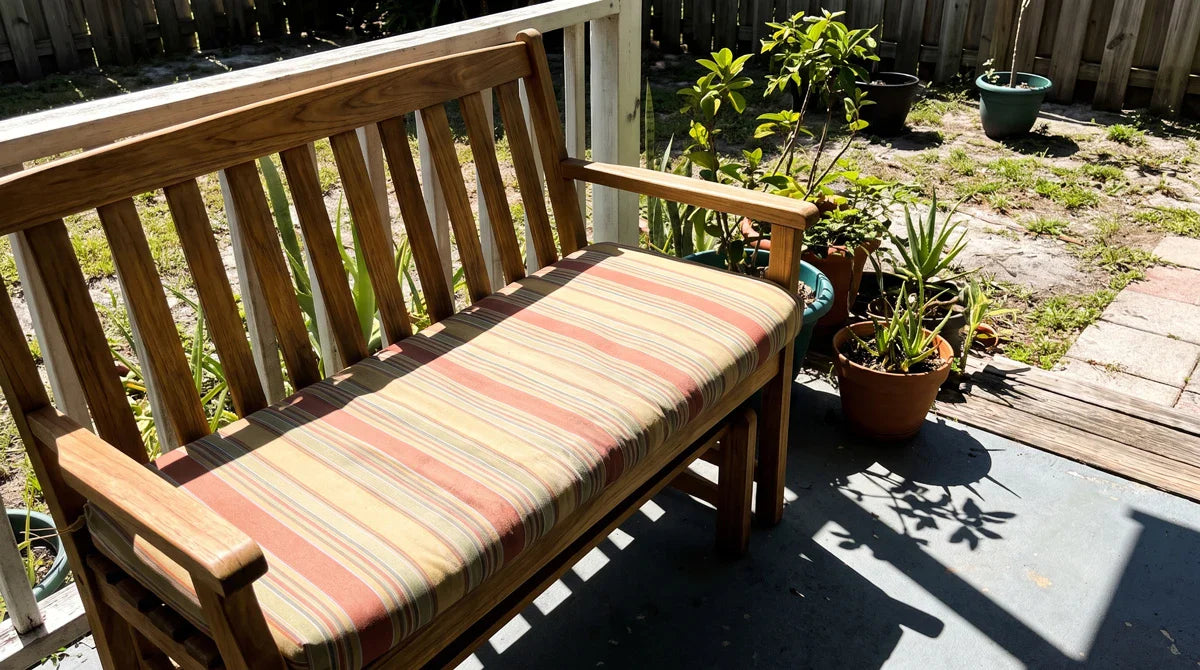
- Corner ties or straps that loop around the seat legs or trim, good for benches with visible framing
- Hook-and-loop (Velcro) strips, a simple fix for marble or lacquered sills where the cushion tends to skate
Should a custom window seat cushion have a zipper, and where should it go?
Yes if you want a washable cover — just keep the zipper off the front-facing edge.
A concealed zipper along the back seam or underside keeps the front of the cushion looking clean and unbroken, which matters most on a window seat since it's usually the focal point of the room. It also makes pulling the cover for a wash a lot less of a wrestling match. If you're curious how this is actually sewn, we walked through it in detail in how to sew a bench cushion cover with a zipper.

Getting the Angles Right the First Time
Honestly, most of the "it doesn't fit" messages we get come down to one of two things: measuring the old worn-out cushion instead of the actual frame, or missing an angle on a bay window that isn't perfectly symmetrical. Slow down on those two steps and the rest of the process — thickness, foam, fabric — is mostly personal preference.

Current offer: Take $60 off orders of $300+, or $125 off orders of $500+ on custom window and bench cushions — applied automatically at checkout while the promotion runs.
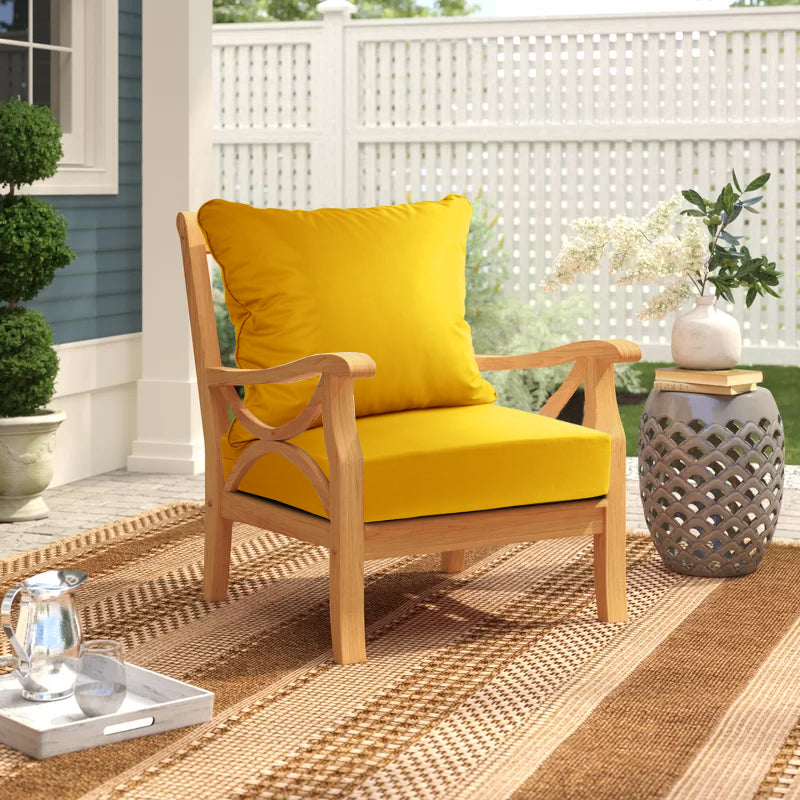
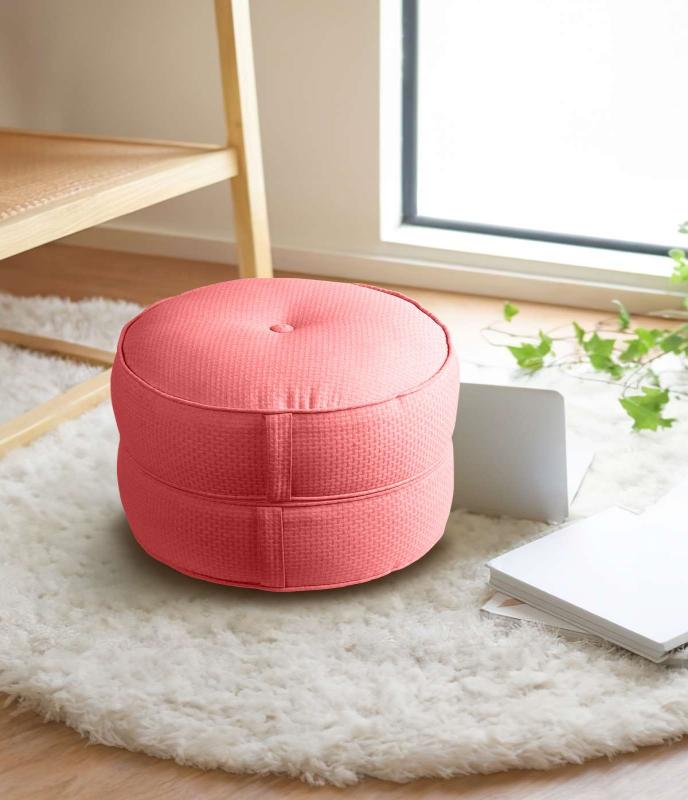
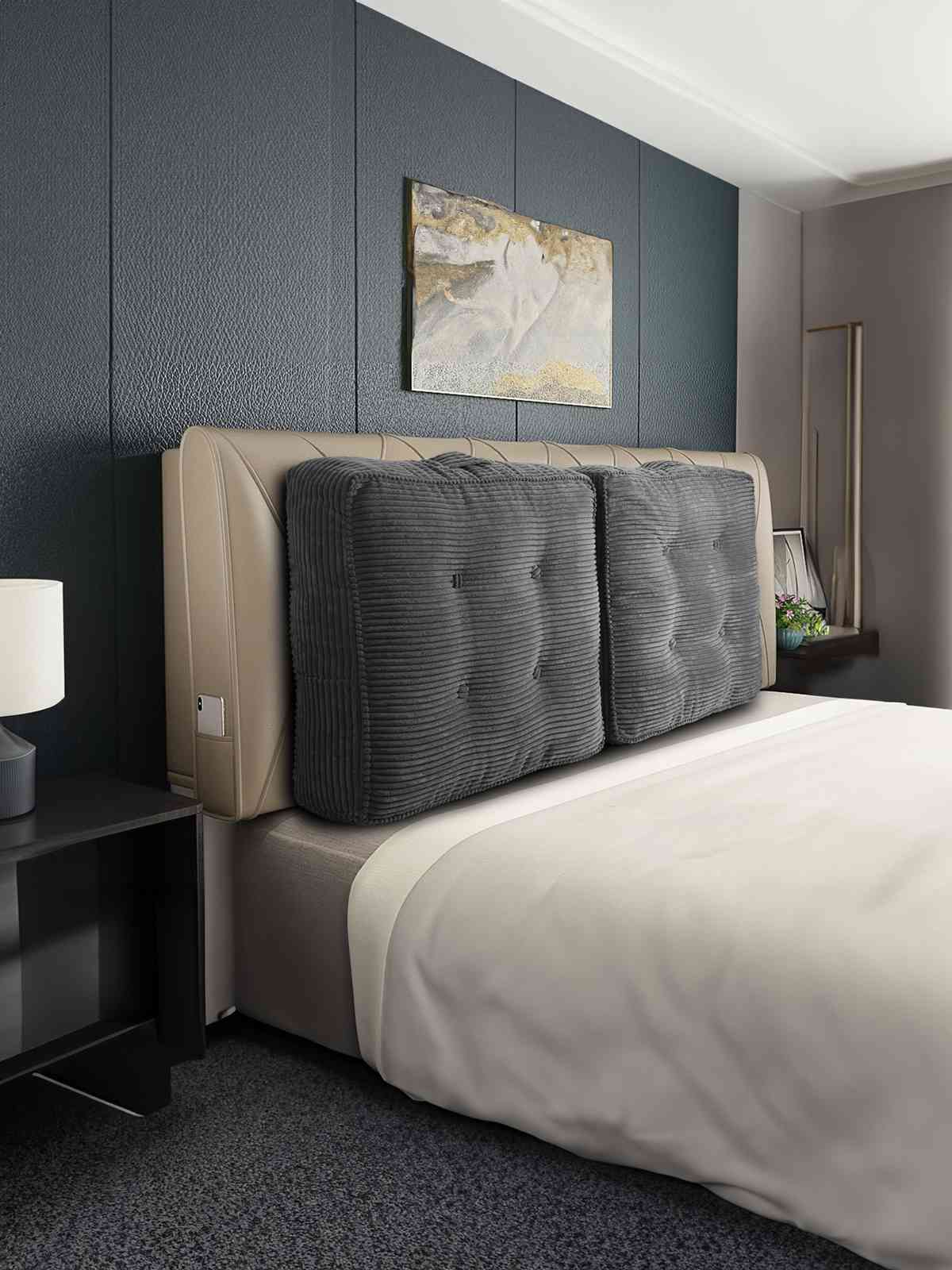
Once you've got your numbers written down — panel widths, angles, depth — you're ready to build. Here are a few of our most-ordered options for window seats:


Not sure which fits your nook? Browse the full window cushion collection for size ranges, or just send us your measurements — we cut every piece to order, angles and all, right here at the Rulaer workshop.



Leave a comment
All comments are moderated before being published.
This site is protected by hCaptcha and the hCaptcha Privacy Policy and Terms of Service apply.